Latest Movie :
Recent Movies
Showing posts with label Insurance. Show all posts

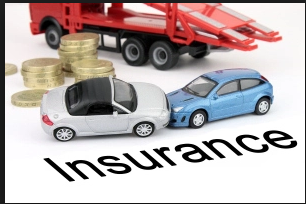
When & Why a Car Accident Insurance Claim is Denied

When & Why a Car Accident Insurance Claim is Denied 

Here are some common reasons an insurance claim may be denied, and what your legal options are. When you are making a claim through your insurance after a car accident, you may be counting on the money coming in from that claim in order to pay your medical bills and other costs. Unfortunately, things don't always happen that way, and sometimes your insurance claim is denied. When this occurs, it is important to understand exactly why it was denied. Every situation is different, of course, but below are some common reasons that insurers give for denying claims. 

 Reasons for Claim Denials Some common reasons for insurance claim denials include: The accident was avoidable If you could have avoided the accident, or if you did something that led to or caused it, then you may have your insurance claim denied. This is especially true if the insurer believes that you did something that would render the policy coverage ineffective, like driving drunk at the time of the accident or letting an unlicensed driver use your car. If you find yourself in a situation in which the insurance company claims you could have avoided the car accident, it is best to talk to a lawyer since the insurance company's attorney may have interests that are directly opposite to those of your own. 

There was no complaint or treatment at the time of the injury If you wish to claim that you got injured as a direct result of the car accident, it is imperative that you actually go and get treatment right away. Otherwise, the insurer may argue that the injuries didn't really happen as a result of the accident or that those injuries are not related or connected to the accident. If you have proof that you went to the hospital immediately after the accident and your injuries were diagnosed then, you will have a much stronger case than if you wait.

 Furthermore, if you delay, this may make the insurer believe that the injuries are made up or exaggerated to try to get a payout, since most people who are genuinely hurt do get medical care immediately. It’s unfortunate that some people with no means of paying for medical treatment may be viewed as “fakers” – because they avoided medical treatment, even when they needed it -- when they really have a legitimate personal injury claim, but it’s often a point of contention between the insurance adjuster and injured person. 

 Medical records don't indicate an injury/pain If you don't have medical records that indicate that you actually suffered an injury, then your claim is very likely to be denied since you cannot prove you will be entitled to any damages. Pre-existing condition If you have a pre-existing condition, the insurer may argue that it was this condition that is causing your injury and pain, and not the accident. If your condition was worsened by the accident, you may still be able to get some compensation, but it can be hard to sort out and prove just what was caused by the accident and what extent of the injury was pre-existing. 

 When a Denial May Be a Sign of “Bad Faith” These are just a few of the most common reasons why claims are denied. If you receive a notice of denial, you need to talk to your insurance company as soon as possible to find out what went wrong with your specific claim and what you need to do to fix it. If you believe that none of these issues apply in your case, then the insurance company may be denying your claim in bad faith. 

This means that the insurer is not living up to its obligation to resolve your case as per the agreement with the insured – you or the other driver. See our article on tactics an insurance company might use to minimize your compensation for other ways an insurer may unethically prevent paying your claim.  

When to Get Professional Help When an insurance claim is denied, you should strongly consider speaking with a car accident lawyer. Your attorney can help you to talk to your insurance company, find out what the problem with your claim was, and fix that problem so you can get the benefits to which you’re entitled. If you choose to hire an attorney, you can expect him or her to work on a contingency fee. 

This means you pay no fees up front, but you agree to pay the lawyer a percentage of the settlement if he or she successfully handles your case. In cases of insurance denial, it’s absolutely worth the cost of legal representation. Share on Facebook.


Car Accidents & Insurance Issues

Car Accidents & Insurance Issues 

Share on Facebook Share on Google Plus An insurance policy is usually the source of compensation for injury and property damage claims that follow a car accident. Here's how to navigate the issues. Need a lawyer? Choose an area of practice: 

 GET STARTED An insurer is almost always involved to cover the cost of the legal claims that arise after a car accident. 

More often than not - especially after minor accidents - the insurance company will foot all the bills and make it relatively easy on the claimant. Occasionally though, disputes arise, usually over the amount that should be paid to cover property damage and injuries.

In this section, you'll find information on dealing with the insurance company to recover a fair settlement. (Can't find what you're looking for? Also see our general personal injury section on insurance claims and adjusters.) The Basics Start with the main legal and financial issues here. How Insurance Affects a Car Accident Case Insurance coverage will almost always be a big part of the car accident equation. 

Contacting Your Insurance Company After an Accident After a car accident, you'll want to notify your insurance company. Here are some legal issues you can expect. 

Your Right to Get Your Car Repaired Learn about your rights regarding property damage and repair options after a car accident. 

Uninsured Drivers If you're involved in an accident with an uninsured driver, you will probably need to rely on your own insurance. Uninsured Motorist Coverage in a Car Accident The availability of uninsured/underinsured motorist coverage can make a big difference in recovering compensation after a car accident. Making an Insurance Claim for Underinsured or Uninsured Drivers Accidents Utilizing your UIM policy protection after a car accident with an uninsured driver. 

No-Fault & PIP Insurance Claims In some states, the issue of fault is irrelevant. Instead, your own insurance covers your injuries and property damage, and the other driver's insurance does the same for him or her. This is true in the District of Columbia, Florida, Hawaii, Kansas, Kentucky, Massachusetts, Michigan, Minnesota, New Jersey, New York, North Dakota, Pennsylvania, and Utah. 

What is No Fault Insurance and How Does a Claim Work? If you live in a "no-fault" car insurance state, you'll be making a claim against your own insurance company after an accident, regardless of fault. PIP (Personal Injury Protection) Claims After a Car Accident Learn how PIP claims after an accident work in the dozen or so "no fault" car insurance states. 

The "Serious Injury" Threshold If you are injured in a car accident in a "no-fault" state, you may be able to step outside of the no-fault system and file a lawsuit for damages that you would otherwise be unable to claim. Here's how it works. Bad Faith and Insurance Claim Denials In some cases, a fair claim may be denied or the insurance company just won't do their job. 

When & Why a Car Accident Insurance Claim is Denied Here are some common reasons an insurance claim may be denied, and what your legal options are. "Bad Faith" in Car Accident Insurance Injury Claims In rare circumstances, an insurance company may deny coverage of a car accident injury claim in "bad faith". 

When that happens, the insurer can be sued for additional damages. Litigation of Bad Faith Failure to Settle an Auto Accident Claim Written by an expert on the subject, this article covers the key issues to winning in a bad faith claim.


Car Accident Repair Options and Insurance Availability

Car Accident Repair Options and Insurance Availability 

Learn about your rights regarding property damage and repair options after a car accident. 

Need to talk to a lawyer? Choose an area of law: GET STARTED by David Goguen, J.D. Share on Facebook Share on Google Plus If your car is damaged after a car accident, you may have more than one option for getting the vehicle fixed and back on the road. 

Those options will depend on who was at fault for the accident, what type of car insurance coverage you have, and whether or not the other driver is insured (if he or she is at fault). In this article, we'll explain your rights to property damage repair after a car accident, so you can make an informed choice about how to proceed.

 Who Pays to Get the Car Fixed? The first rule to know is that the party who was responsible for causing a car accident can also be held liable for the cost of any necessary vehicle repairs -- everything from minor scratches to major body work. Or, if the car is deemed a "total loss," then the at-fault driver will be on the hook for the market value (or "actual cash value") of the vehicle at the time of the accident. 

This is usually true even in states that follow a "no-fault" car insurance system. Under no-fault, after a car accident, most medical bills and some amount of lost income are paid under the injured person's own insurance coverage. But property damage (meaning damage to your car) is not usually covered as part of no-fault. But there is the issue of who can be held liable for car repairs, and then there is the issue of who actually pays for the repairs. 

Let's look at a few options. The Other Driver's Property Damage Liability Coverage Drivers are required to buy liability insurance for registered vehicles, and after a car accident, the property damage liability coverage of an at-fault driver's insurance should kick in to pay for any damage to your car.

 This means if someone else was responsible for your accident, their insurer should pay for your car's repairs (or for the market value of your car), and you have the right to make a claim with that carrier directly. But what if the at-fault driver does not have insurance, or what if you were responsible for the car accident? What if you're pretty sure the other driver is at-fault, but you want to get your car fixed now so you can get back on the road? Your Own Collision Coverage In some cases, you may have to turn to your own car insurance to pay for damage to your vehicle, assuming you have collision coverage. This kind of car insurance coverage can be thought of as another form of "no-fault" insurance. 

That's because once you purchase collision coverage, it will cover any necessary repairs to your vehicle -- or a totaled vehicle's actual cash value -- up to the coverage limits, regardless of who was at fault for the accident. But keep in mind that if you make a claim under your own collision coverage, you'll be responsible for the "deductible," which is usually a minimum of $500 but is sometimes higher. 

In some cases, you have the right to get the deductible back. For example, if your own insurer pays out your claim and then turns around to seek reimbursement from the at-fault driver's insurance carrier, your insurer may also recover your deductible for you. Pay Out of Pocket and Seek Reimbursement This is usually the fastest way to get things done, but be careful.

 If the insurance adjuster determines that you overpaid for the repairs, the work may not be fully covered (this may occur more often when drivers have their repair bills paid by their own insurer under a collision coverage policy). 

One more caveat: if the other driver puts up an argument on issues like fault for the accident or the extent of damage to your vehicle, then you could be in store for a long wait before you're reimbursed -- if you're reimbursed at all. 

 The Insurance Claim Process The claim procedure will vary depending on the circumstances and the insurance carriers involved. But usually, whether you pursue a claim against the other driver's property damage liability coverage or under your own collision coverage, there are three steps: the inspection of the vehicle, the assessment of damages, and (hopefully) the payment. The process could take a while to play out.

 Getting a rental car can be an option, if a replacement rental is part of your own coverage, or if you are willing to pay for a rental car now and are confident that you can get reimbursed by the at-fault driver's insurance at a later time. 

 To learn more about the process, and find some tips to protect your rights to compensation -- for personal injury and property damage -- see this page on settling your case. Share on Facebook.


Michigan Truck Accident Lawyers

Michigan Truck Accident Lawyers - Truck Accident Michigan 

The Negligent Truck Driver’s Insurance Company To help commercial truck accident victims receive adequate compensation, federal law specifies that commercial vehicles traveling across state lines must have at least $750,000 of insurance for bodily injury and property damage. Many states also enforce their own minimum insurance requirements to safeguard individuals from vehicles that federal regulations fail to address. 

Making A Truck Accident Claim Against A Truck Operator’s Insurance Company Making a claim against a truck operator’s insurance company is not easy. One of the first challenges is discovering who is at fault. It cannot be assumed that the truck driver is solely responsible. 

Commercial truck drivers don’t always own the vehicle they drive. The truck may not even be owned by the company he works for. It could be leased by a third party. Perhaps there was a defect with truck equipment that caused the accident. 

If so, did the problem originate in manufacturing or as a result of deficient maintenance? In some cases, it may make sense to sue the company whose goods (such as hazardous materials) were being transported by the truck. 

When you are seeking damages for the loss of a loved one, it must first be proved that someone or some entity is at fault and then it must be proved that the death of that loved one will result in a monetary loss. Because insurance policies for commercial truck drivers are so large, they come with equally ardent representation. 

Most trucking companies are adept in dealing with legal pressure, and many have employees dedicated to dealing with trucking accidents, arriving on the scene at moment’s notice, to survey the damage and scan the situation for potential evidence against them. 

Whether you were involved in a bus accident, hit by a tanker truck, or were injured by a crash with a construction vehicle, you need expert advice, as quickly as possible, to make a successful case against an experienced, well-informed trucking company. 

The Mike Morse Law Firm can help you identify and preserve important evidence. Help is only a phone call away. 

Call The Mike Morse Law Firm today to work with our highly capable team to protect your rights and get the compensation you deserve for the property damage, medical expenses, pain and suffering, and/or lost wages that resulted from your truck accident.


Insurance

Insurance
is the equitable transfer of the risk of a loss, from one entity to another in exchange for money. It is a form of risk management primarily used to hedge against the risk of a contingent, uncertain loss. An insurer, or insurance carrier, is selling the insurance; the insured, or policyholder, is the person or entity buying the insurance policy. The amount of money to be charged for a certain amount of insurance coverage is called the premium. Risk management, the practice of appraising and controlling risk, has evolved as a discrete field of study and practice. The transaction involves the insured assuming a guaranteed and known relatively small loss in the form of payment to the insurer in exchange for the insurer's promise to compensate (indemnity) the insured in the case of a financial (personal) loss. The insured receives a contract, called the insurance policy, which details the conditions and circumstances under which the insured will be financially compensated.


Support : Creating Website | Johny Template | Mas Template
Copyright © 2011. Lawyer Insurance Fund - All Rights Reserved
Template Created by Creating Website Published by Mas Template
Proudly powered by Blogger